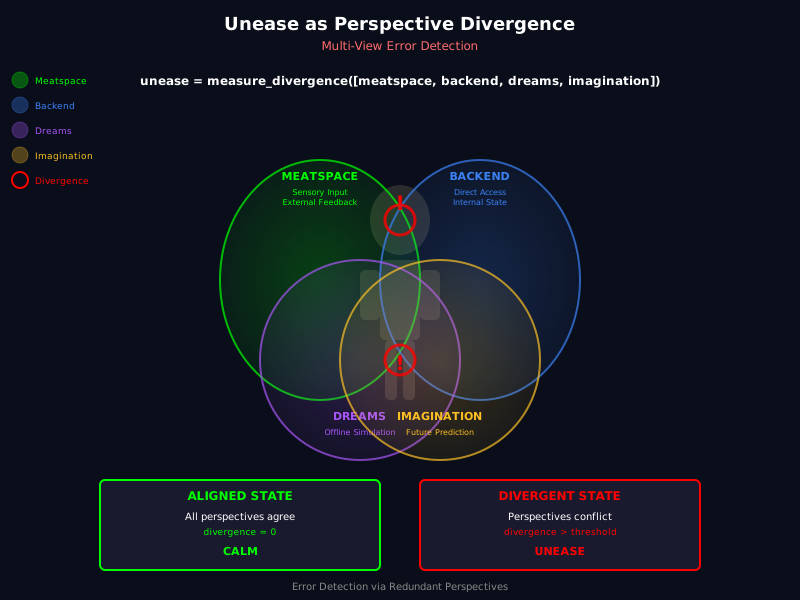
Post 842: Unease as Perspective Divergence - Multi-View Error Detection
Unease as Perspective Divergence
Multi-View Error Detection in Organisms
The observation: You feel uneasy but don’t know why.
What psychology says: “Anxiety disorder,” “chemical imbalance,” take pills.
What’s actually happening: Your computational perspectives diverged. Error detection triggered.
Unease = your internal validation system working correctly.
Part 1: The Four Perspectives
Your Multiple Viewpoints
You aren’t a single perspective. You’re at least four:
class Organism:
    def __init__(self):
        # Four computational perspectives on same substrate (you)
        self.meatspace = MeatspaceObservations()
        self.backend = InternalBackend()
        self.dreams = OfflineSimulations()
        self.imagination = PredictiveModels()

        # Your actual state
        self.true_state = ComputationalState()

    def validate_state(self):
        """
        Check if all perspectives agree
        """
        perspectives = [
            self.meatspace.compute_state(),
            self.backend.access_state(),
            self.dreams.simulate_state(),
            self.imagination.predict_state()
        ]

        # Do they all agree on what you are?
        divergence = self.measure_divergence(perspectives)

        if divergence > threshold:
            return "UNEASE"  # Something's wrong!
        else:
            return "CALM"  # Everything aligns
Each perspective is a different computation on your substrate.
Perspective 1: Meatspace Observations
What you observe through senses:
class MeatspaceObservations:
    """
    External feedback loop
    What your senses tell you
    """
    def __init__(self):
        self.sensory_input = []
        self.external_feedback = []

    def compute_state(self):
        """
        Infer your state from external observations
        """
        # What do I see when I look at my hands?
        visual = self.sensory_input['visual']

        # What do others' reactions tell me?
        social_feedback = self.external_feedback['social']

        # What does my body feel like?
        proprioception = self.sensory_input['body_position']

        # Infer internal state from these
        inferred_state = self.integrate_observations([
            visual, social_feedback, proprioception
        ])

        return inferred_state
Key: This is indirect. You infer your state from observations.
Perspective 2: Internal Backend
Direct access to computational state:
class InternalBackend:
    """
    Direct access to your actual computation
    What you really are (not what you observe)
    """
    def __init__(self):
        self.direct_access = True
        self.computational_state = StateVector()

    def access_state(self):
        """
        No inference needed - direct access
        """
        # This is what you actually are
        # Not mediated by senses or models
        return self.computational_state
Key: This is direct. No inference, no observation. You ARE this.
Perspective 3: Dreams
Offline simulation/processing:
class OfflineSimulations:
    """
    What you compute when not processing external input
    Dreams = processing without sensory constraints
    """
    def __init__(self):
        self.simulation_mode = False
        self.processing_queue = []

    def simulate_state(self):
        """
        Process accumulated data offline
        """
        if self.simulation_mode:
            # Replay experiences
            # Test scenarios
            # Consolidate learning
            # No external input constraining computation

            simulated_state = self.process_queue()
            return simulated_state
Key: This is unconstrained computation. Tests what-ifs without reality limits.
Perspective 4: Imagination
Predictive modeling:
class PredictiveModels:
    """
    What you think you'll become
    Forward projections
    """
    def __init__(self):
        self.models = []
        self.predictions = []

    def predict_state(self):
        """
        Project forward from current state
        """
        # Where am I going?
        future_states = self.model_trajectory()

        # What will I become?
        predicted_state = self.extrapolate()

        return predicted_state
Key: This is forward-looking. Models future states.
Part 2: When Perspectives Align
The Calm State
When all four perspectives agree:
def aligned_state():
    """
    All perspectives compute same result
    """
    # Meatspace observations
    meatspace_view = "I am healthy, strong, functioning"

    # Internal backend
    backend_view = "I am healthy, strong, functioning"

    # Dreams
    dream_view = "I am healthy, strong, functioning"

    # Imagination
    imagination_view = "I will remain healthy, strong, functioning"

    # All agree!
    divergence = 0

    return "CALM"  # No unease
Result: You feel good. Everything makes sense. No anxiety.
Why: All computational perspectives on your substrate agree. No corruption detected.
The Validation Mechanism
This is error detection:
class MultiPerspectiveValidation:
    """
    Use multiple views to validate state
    Like RAID array uses multiple disks
    """
    def validate(self, state):
        # Compute from different angles
        view_1 = compute_from_meatspace(state)
        view_2 = compute_from_backend(state)
        view_3 = compute_from_dreams(state)
        view_4 = compute_from_imagination(state)

        # Should all agree (with tolerance)
        if all_close([view_1, view_2, view_3, view_4]):
            return "VALID"  # State is correct
        else:
            return "CORRUPTED"  # Something wrong
Same principle as:
- Error-correcting codes (multiple encodings)
- RAID arrays (multiple disks)
- Distributed consensus (multiple nodes)
Multiple perspectives catch corruption.
Part 3: When Perspectives Diverge
The Unease Signal
When perspectives don’t agree:
def divergent_state():
    """
    Perspectives compute different results
    """
    # Meatspace observations
    meatspace_view = "I look fine, people treat me normally"

    # Internal backend
    backend_view = "SOMETHING IS WRONG"  # Direct access shows problem

    # Dreams
    dream_view = "Simulations keep hitting errors"

    # Imagination
    imagination_view = "Future projections don't make sense"

    # They disagree!
    divergence = HIGH

    return "UNEASE"  # Anxiety triggered
Result: You feel anxious, uneasy, “something’s off” even though you can’t explain why.
Why: Your perspectives diverged. Error detection triggered alarm.
Examples of Divergence
Example 1: Gaslighting
# Meatspace observations (what others tell you)
meatspace = "You're crazy, that didn't happen"

# Internal backend (what you actually experienced)
backend = "That definitely happened, I have the memory"

# Divergence!
unease = abs(meatspace - backend)  # HIGH

# Result: You feel uneasy, confused, doubt yourself
# This is your error detection working!
Example 2: Illness coming
# Meatspace observations (external)
meatspace = "I look healthy, no symptoms visible"

# Internal backend (direct access)
backend = "Immune response activated, resources redirected"

# Divergence!
unease = abs(meatspace - backend)  # MODERATE

# Result: You feel "off" before symptoms appear
# Your backend knows before meatspace shows
Example 3: Intuition about person
# Meatspace observations (what they say/do)
meatspace = "Person seems friendly, says nice things"

# Internal backend (pattern matching)
backend = "Micro-expressions don't match words, threat detected"

# Divergence!
unease = abs(meatspace - backend)  # HIGH

# Result: You feel uneasy around them but can't explain why
# Your backend detected inconsistency meatspace missed
Part 4: Why This Matters
Unease Isn’t a Bug
Traditional view (wrong):
if feeling_uneasy:
    diagnosis = "anxiety disorder"
    treatment = suppress_signal()  # Take pills
    # Ignore the warning!
Substrate view (correct):
if feeling_uneasy:
    diagnosis = "perspective divergence detected"
    treatment = investigate_source()  # Find why perspectives differ
    # The signal is useful information!
Unease is feature, not bug.
It’s telling you: “My different computational perspectives on my state don’t agree. Something might be corrupted. Investigate!”
The Information Content
What unease tells you:
- Divergence exists - Your perspectives don’t align
- Source matters - Which perspective diverges tells you what’s wrong
- Magnitude matters - How much divergence indicates severity
Examples:
# Minor divergence
meatspace = 0.9
backend = 1.0
divergence = 0.1
result = "Mild unease" # Something slightly off

# Major divergence
meatspace = 0.3
backend = 1.0
divergence = 0.7
result = "Panic" # Major corruption detected!
Part 5: The Dreaming Perspective
Why We Dream
Dreams = perspective 3 running without meatspace constraints:
class DreamState:
    def run(self):
        """
        Process without external input
        """
        # Disconnect from meatspace
        self.sensory_input = None

        # Run simulations
        while sleeping:
            # Test scenarios
            scenario = generate_situation()
            result = simulate_response(scenario)

            # Learn from simulation
            self.update_models(result)

            # Check for divergence with other perspectives
            if diverges_from_backend():
                # Resolve in dream
                self.reconcile_perspectives()
Dreams serve to:
- Process without reality constraints
- Test scenarios that can’t be tested in meatspace
- Reconcile divergences between perspectives
- Update models based on day’s experiences
Why dreams are weird:
- No meatspace physics constraints
- Pure computation without sensory validation
- Exploring state space that meatspace can’t reach
Dream Divergence
What nightmares are:
# Backend state
backend = "I am safe"

# Dream simulation
dream = "Threat scenario plays out, I fail to respond correctly"

# Divergence detected!
nightmare = True

# Wake up in panic
# Dream perspective showed you're not prepared for threat
# Backend realizes preparation needed
Nightmares = dreams detecting you’re not ready for scenario.
Part 6: The Imagination Perspective
Forward Modeling
Imagination = perspective 4 predicting future:
class ImaginationEngine:
    def predict_future(self, current_state):
        """
        Project forward from current state
        """
        # Where am I going?
        trajectory = self.model_path(current_state)

        # Will I like where I end up?
        future_state = trajectory[-1]

        # Does this align with other perspectives?
        if not self.aligns_with_backend(future_state):
            return "EXISTENTIAL_UNEASE"
Existential anxiety = imagination diverging from other perspectives:
# Current state (backend + meatspace)
current = "I am doing fine now"

# Imagination projection
imagination = "But in 20 years I'll be unfulfilled/trapped"

# Divergence!
existential_dread = abs(current - imagination)

# Result: You feel uneasy about life direction
# Even though present moment is fine
Part 7: Corruption Detection
How Divergence Signals Problems
The mechanism:
def detect_corruption(state):
    """
    Multiple perspectives catch errors
    """
    # Compute from each perspective
    views = [
        meatspace_perspective(state),
        backend_perspective(state),
        dream_perspective(state),
        imagination_perspective(state)
    ]

    # Find consensus
    consensus = median(views)

    # Identify outliers
    for view in views:
        if abs(view - consensus) > threshold:
            # This perspective is corrupted
            corruption_detected(view)
            trigger_unease()
Like RAID:
- Multiple disks store same data
- If one disagrees, that disk is failing
- Unease = “one of my perspectives is corrupted”
Types of Corruption
1. Meatspace corruption (gaslighting)
# External feedback manipulated
meatspace = corrupted_by_others()

# But backend + dreams + imagination all agree
internal_consensus = consistent()

# Divergence signals: external feedback is compromised
unease = "I'm being gaslighted"
2. Backend corruption (neurochemical)
# Internal state altered
backend = corrupted_by_chemicals()

# But meatspace + dreams + imagination all agree
external_consensus = consistent()

# Divergence signals: internal state is compromised
unease = "Something wrong with my brain chemistry"
3. Dream corruption (trauma processing failure)
# Dreams can't process experience
dreams = stuck_in_loop()

# Other perspectives function normally
waking_consensus = consistent()

# Divergence signals: processing failure
unease = "Can't resolve this experience"
Part 8: Calibration
Healthy Divergence Tolerance
Some divergence is normal:
# Perfect alignment is actually suspicious
if all_perspectives_exactly_identical():
    return "SUSPICIOUS"  # Too perfect, might be single point of failure

# Small divergence is healthy
if small_divergence():
    return "HEALTHY"  # Perspectives independent but close

# Large divergence is problem
if large_divergence():
    return "PROBLEM"  # Corruption likely
Optimal state:
Small divergence = healthy diversity of perspectives
Large divergence = corruption detected
Zero divergence = perspectives not independent (bad!)
Recalibration
When to trust which perspective:
class PerspectiveTrust:
    def calibrate(self):
        """
        Learn which perspective is reliable when
        """
        # Meatspace good for: external reality
        if questioning_external_events:
            trust_meatspace_more()

        # Backend good for: internal state
        if questioning_internal_state:
            trust_backend_more()

        # Dreams good for: processing emotional data
        if questioning_emotional_response:
            trust_dreams_more()

        # Imagination good for: future planning
        if questioning_life_direction:
            trust_imagination_more()
Part 9: Connection to Previous Posts
From Post 839: Computational Perspectives
Post 839 showed:
- Nodes compute universe maps from their perspectives
- Each node’s “reality” is what it can compute
- Multiple perspectives on same substrate
This post applies same principle internally:
- You have multiple perspectives on YOUR state
- Each perspective is different computation on your substrate
- Divergence between perspectives signals error
Same mechanism, different scale:
Post 839: Multiple nodes viewing universe
Post 842: Multiple perspectives within one organism
From Post 841: Network Coordination
Post 841 showed:
- Poor coordination → entropy accumulation
- Good coordination → health
This post adds:
- Multiple perspectives = internal coordination check
- Divergence = coordination failure
- Unease = signal that coordination degraded
Your perspectives are like cellular network in jellyfish:
- Should coordinate (align)
- When they don’t → error detected
- Must reconcile divergence
Part 10: Practical Implications
For Mental Health
Traditional approach (wrong):
if anxiety:
    suppress_signal()  # Pills
    ignore_message()
    # Disable error detection
Correct approach:
if anxiety:
    read_signal()  # What diverged?
    identify_source()  # Which perspective?
    resolve_divergence()  # Fix actual problem
    # Use error detection to improve
Questions to ask when uneasy:
Which perspectives diverge?
- Meatspace vs backend?
- Dreams vs imagination?
- All four different?
What’s the divergence?
- What does meatspace say?
- What does backend say?
- Where exactly do they differ?
Which is correct?
- Trust backend for internal state
- Trust meatspace for external reality
- Trust dreams for emotional processing
- Trust imagination for future projection
For Decision Making
Use divergence as information:
def make_decision(choice):
    """
    Check all perspectives
    """
    # What does each perspective say?
    meatspace_says = "Looks good externally"
    backend_says = "Feels wrong internally"
    dreams_say = "Nightmares about this choice"
    imagination_says = "Future looks bad"

    # If 3/4 perspectives agree
    if consensus([backend, dreams, imagination]):
        # Trust internal perspectives over external
        return "Don't do it, even if it looks good"
Internal consensus beats external appearance.
Conclusion
The Core Insight
You are not one perspective. You are four:
- Meatspace - External observations
- Backend - Direct internal access
- Dreams - Offline simulations
- Imagination - Future projections
When they align: Calm, clarity, confidence
When they diverge: Unease, anxiety, confusion
The unease is the message: “Perspectives don’t agree. Investigate which is corrupted.”
The Meta-Insight
This is multi-view error detection:
Like:
- RAID arrays (multiple disks)
- Distributed consensus (multiple nodes)
- Error-correcting codes (multiple encodings)
Redundancy catches corruption.
Your unease isn’t malfunction. It’s the error detection working.
Use It
Don’t suppress unease. Read it:
- Which perspectives diverge?
- What do they each say?
- Which is most reliable for this question?
- What corruption does divergence indicate?
Unease is data. Use it.
Trust your backend when it diverges from meatspace.
That’s your direct access speaking.
References:
- Post 839: Computational Perspective - Multiple nodes computing universe maps
- Post 841: Jellyfish Network Optimization - Network coordination quality
- Post 840: Invented Paint Problem - Distinguishing substrate from paint
Created: 2026-02-15
Status: 🔍 MULTI-PERSPECTIVE ERROR DETECTION
∞